Study in Germany from Nepal
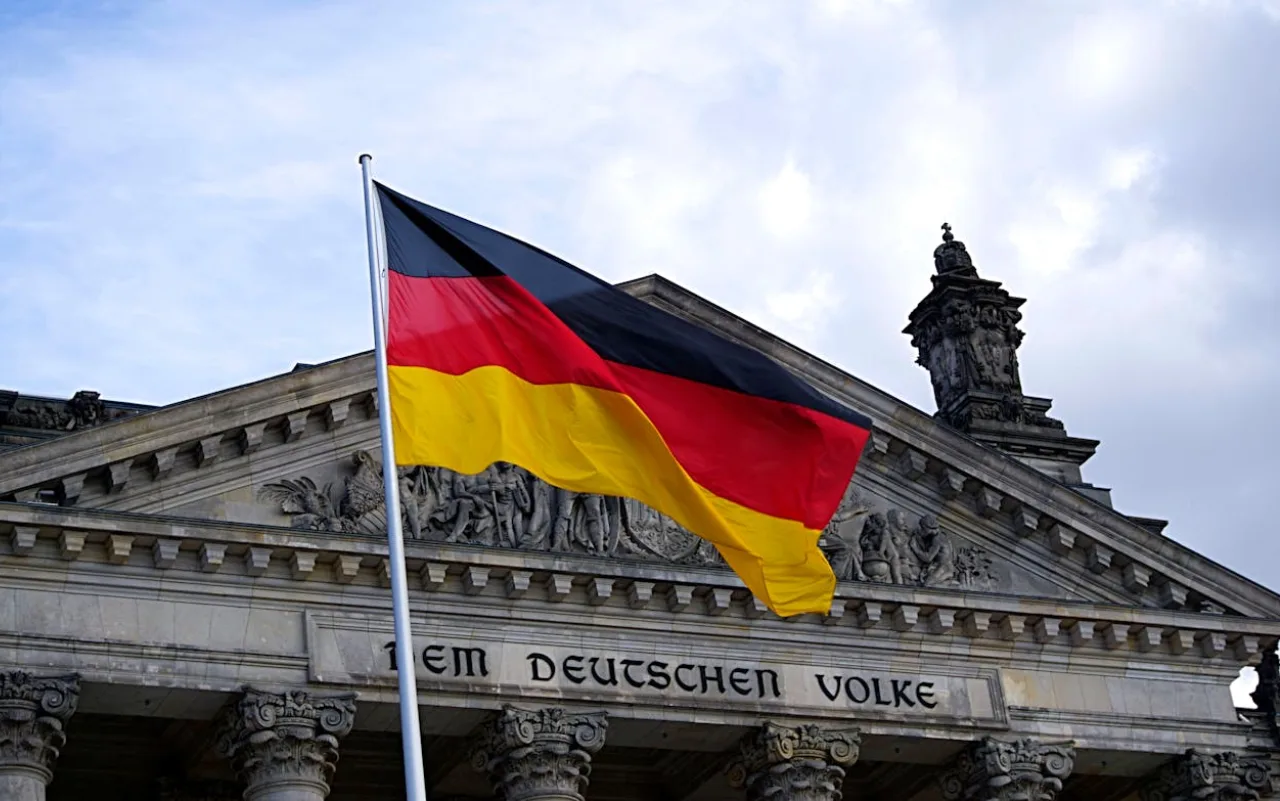
Germany is the single most compelling study destination in Europe for Nepali students with a specific combination of priorities: world-class education, zero tuition fees at public universities, a structured financial proof system that is transparent rather than adversarial, strong post-study work rights, and one of the world's most accessible pathways to permanent residency for skilled graduates through the EU Blue Card.
Germany has become one of the top European destinations for students who want to study abroad from Nepal. With tuition-free public universities, world-class academic programs, and excellent post-study career opportunities, it has become one of the top-choice countries in Europe. The model is fundamentally different from Australia or Canada: instead of paying high tuition and hoping for PR, in Germany you pay almost nothing in tuition, fund your living costs through a blocked account, and build toward permanent residency through a clearly structured skilled migrant system.
This guide covers everything Nepali students need for the 2026 intakes: the tuition-free model and its limits, the critical Studienkolleg pathway for +2 graduates, the blocked account (Sperrkonto) step by step, both student visa types, the uni-assist and direct application systems, German and English language requirements, the DAAD scholarship reality, 120-day work rights, the 18-month Job Seeker Visa, and the EU Blue Card pathway to permanent residency.
Why Study in Germany?
- Tuition-free public universities. This is Germany's most significant differentiator. Most public universities (Staatliche Universitäten) charge only a semester contribution of EUR 150 to 350 per semester, which covers administrative costs and typically includes a public transport semester ticket. Actual tuition in the sense of program fees does not exist at German public universities for most programs. This is not a scholarship: it applies to all enrolled students regardless of nationality.
- Globally ranked research universities at near-zero program cost. Universities such as LMU Munich, Heidelberg University, Technical University of Munich (TUM), and Humboldt University of Berlin regularly appear in the global top 100, while many others rank within the top 200 to 300 worldwide. Accessing these institutions at near-zero tuition cost is available nowhere else in the world.
- EU Blue Card is one of the world's best post-graduation pathways. Skilled graduates from Germany who secure a qualifying job offer can obtain the EU Blue Card, which leads to permanent residence (Niederlassungserlaubnis) in just 21 to 33 months depending on German language ability. This is significantly faster than PR pathways in Australia, Canada, or the UK.
- 18-month Job Seeker Visa after graduation. After completing your degree, you can remain in Germany for up to 18 months to search for qualified employment with no job offer required in advance. During this time you can work in any role, and you can switch to a work residence permit as soon as you secure a qualifying position.
- 120 full days of paid work per year while studying. International students can work 120 full days or 240 half days per year without additional permission. Part-time jobs typically pay EUR 12 to 18 per hour.
- Strong industry and research ecosystem. Germany is the world's fourth-largest economy and home to global corporations including BMW, Volkswagen, Siemens, SAP, BASF, Bayer, and Bosch. Engineering, computer science, and business graduates from German universities have some of the strongest employer networks in Europe.
- Central European location. From German cities, the entire EU is accessible. Schengen area free movement means Nepali students with a German residence permit can travel across 26 European countries without additional visas.
The Critical Distinction: Tuition-Free Does Not Mean Free
The tuition-free model is Germany's biggest selling point and its most misunderstood aspect. Nepali students and families sometimes arrive with the expectation that studying in Germany costs very little overall. This is not accurate.
What tuition-free means:
- No tuition fee for the program of study at public universities
- Only a semester contribution of EUR 150 to 350 per semester (EUR 300 to 700 per year) covering administration, student union, and usually a regional transport pass
What you still pay for:
- Living costs: rent, food, transport, health insurance, personal expenses
- The blocked account deposit of EUR 11,904 (required upfront before the visa is granted)
- Health insurance (mandatory, approximately EUR 110 to 130 per month)
- Visa fee (EUR 75)
- Flights, accommodation setup, and initial living costs before the blocked account is activated
- Document legalization and translation costs
- Language test fees (TestDaF, IELTS, or equivalent)
The blocked account is just one component of total Germany costs: students need additional EUR 3,000 to 8,000 for semester fees, health insurance, flights, and setup expenses beyond the blocked account deposit. The total first-year cost for a Nepali student in Germany is realistically NPR 25 to 35 lakhs even with tuition-free education. This is lower than Australia, the UK, or the USA, but not negligible.
Understanding the German Higher Education System
Germany has two distinct types of higher education institutions that matter for Nepali students:
| Factor | Universität (Research University) | Fachhochschule / HAW (University of Applied Sciences) |
|---|---|---|
| Focus | Theoretical and research-oriented | Applied, practical, industry-facing |
| Bachelor's duration | 3 to 4 years | 3 to 4 years |
| Master's duration | 2 years | 1.5 to 2 years |
| PhD access | Yes, directly after master's | Typically requires enrollment at a research university for PhD |
| Entry requirements | More selective; specific subject prerequisites common | More accessible; broader entry profiles accepted |
| Tuition fees | None (semester contribution only) | None (semester contribution only) |
| Examples | TU Munich, LMU Munich, TU Berlin, Heidelberg, RWTH Aachen, Humboldt Berlin | HAW Hamburg, Hochschule München, Hochschule Mannheim, FH Aachen |
| Best for | Research careers, PhD, highly technical or science-based programs, DAAD scholarship applications | Industry-facing engineering, IT, business, design, social work programs with strong employer links |
Both types are state-funded public institutions and both are tuition-free. For most Nepali students, the Fachhochschule path offers more accessible entry requirements while still delivering globally recognized qualifications and excellent employment outcomes.
Studienkolleg: The Critical Step for Nepali +2 Graduates
This section is the most important one to read if you completed your education in Nepal at the +2 level and want to pursue a bachelor's degree in Germany. Most Nepali students do not understand this step until they are deep into the application process.
Germany does not directly recognize the Nepali +2 (SLC + 2 years of higher secondary) as equivalent to the German Abitur (12 to 13 years of school education) for direct university admission. Students who complete +2 in Nepal must complete a one-year foundation course called Studienkolleg before starting their bachelor's degree.
What is Studienkolleg? It is a one-year preparatory course offered by German universities and dedicated Studienkolleg institutions that bridges the gap between your Nepali +2 and German university-level requirements. It teaches academic German, subject-specific foundational knowledge (mathematics, sciences, or humanities depending on your intended field), and German university study methods.
At the end of Studienkolleg, you take the Feststellungsprüfung (FSP), the assessment test that qualifies you for university admission. Passing the FSP is the gateway to bachelor's enrollment at a German university.
Key facts about Studienkolleg for Nepali students:
- Duration: typically 2 semesters (approximately 1 year)
- Language: German (B1 to B2 level required for entry)
- Cost: State Studienkollegs are free; private Studienkollegs charge fees (EUR 4,000 to 8,000)
- There are different course types (T-Kurs for STEM, W-Kurs for business and economics, M-Kurs for medicine and biology, G-Kurs for humanities, S-Kurs for languages). Choose based on your intended bachelor's field.
- Entry is competitive. You need at least German B1 to B2 level and a good academic record from your +2
- The visa application process for Studienkolleg follows the same German student visa procedure
The exception: direct entry through a completed bachelor's degree. If you have already completed a bachelor's degree in Nepal (from a recognized university such as Tribhuvan University, Kathmandu University, or Pokhara University), you can apply directly to a German master's program without Studienkolleg. Direct bachelor's entry is also possible for students with specific prior qualifications that German universities recognize as equivalent. Always verify your specific eligibility with the target university or through uni-assist before planning your pathway.
Admission Requirements for Nepali Students
Bachelor's degree (via Studienkolleg)
- Completed +2 with strong marks in subjects relevant to your intended field
- German language proficiency: B1 to B2 for Studienkolleg entry; B2 to C1 for the Feststellungsprüfung and university enrollment
- Academic transcripts, school leaving certificates, passport
- Application via Studienkolleg or through the university's international office
Master's degree (direct entry)
- Bachelor's degree from a recognized Nepali institution. Tribhuvan University degrees are generally recognized. Kathmandu University and Pokhara University degrees are also recognized at most German institutions.
- GPA equivalent to German grade 2.5 or better (approximately equivalent to 3.0 on US scale or 65 to 70% in the Nepali system). Highly competitive programs at TU Munich or Heidelberg expect better.
- Motivation letter, CV, two letters of recommendation, academic transcripts, research proposal for research-focused programs
Language requirements for master's programs:
- For German-taught programs: TestDaF 4x4 (achieving level 4 in all four sections) or DSH-2 (Deutsche Sprachprüfung für den Hochschulzugang). B2 is typically the minimum, C1 preferred.
- For English-taught programs: IELTS 6.0 to 6.5 or TOEFL iBT 80 to 90 depending on the institution
- Many master's programs at German universities are English-taught. This is particularly common in engineering, computer science, business, and natural sciences at both research universities and Fachhochschulen.
PhD (fully funded research positions)
German PhD positions are typically funded employment positions, not student fee-paying programs. PhD candidates (Doktoranden) are hired as research assistants and paid a salary of approximately EUR 1,400 to 2,000 per month (50 to 75% of TV-L E13 scale). Tuition does not apply. Find PhD positions through the DAAD, individual university research group websites, ResearchGate, and AcademicTransfer.
German vs English: Which Language Route to Choose
This is the most strategically important decision Nepali students make when planning to study in Germany. It affects your admission eligibility, your visa timeline, your employment prospects after graduation, and your long-term ability to stay in Germany.
| Factor | German-Taught Programs | English-Taught Programs |
|---|---|---|
| Language required | TestDaF 4x4 or DSH-2 (B2 minimum, C1 preferred) | IELTS 6.0 to 6.5 or TOEFL iBT 80 to 90 |
| Program range | All levels and fields; widest program selection | Over 1,500 English programs, primarily at master's level. Fewer at bachelor's level. |
| Employment prospects | Significantly stronger. German-speaking graduates access the full job market including local SMEs, government agencies, and German-language industries. | Good at multinational companies and startups but limited in local German employers and public sector without German language skills. |
| PR pathway | German language (B2 or C1) can shorten the EU Blue Card permanent residency timeline from 33 months to 21 months | Standard 33-month timeline to permanent residency via EU Blue Card without B1 German proficiency |
| Daily life | Full integration; daily tasks, administrative processes, and healthcare are manageable | University life is manageable; daily life outside campus requires some German |
| Preparation time | Learning German to B2 or C1 level typically takes 12 to 18 months of dedicated study for Nepali students | IELTS preparation is typically 2 to 4 months from a reasonable English baseline |
The strategic recommendation for most Nepali students is this: if you are serious about building a career in Germany and potentially staying long-term, invest in German language proficiency before you go. Students who arrive with German B2 or C1 have dramatically better employment outcomes, PR timelines, and overall life quality in Germany than those who rely solely on English. If your primary goal is a German degree for its global recognition with the intention of returning to Nepal or moving to an English-speaking country, an English-taught master's is the more efficient route.
TestDaF: the German language test for university admission
The TestDaF (Test Deutsch als Fremdsprache) is the primary German language test for university admission. It tests Reading, Listening, Writing, and Speaking, each scored from TDN 3 to TDN 5. Most German universities require TestDaF 4x4 (level 4 in all four sections). Some require TDN 5 in all sections.
TestDaF is available in Nepal. Book through the official Goethe-Institut Nepal in Kathmandu, which also offers German language courses from A1 to C1 level. Goethe-Institut courses are widely regarded as the highest-quality German language instruction available in Nepal and are the recommended starting point for students targeting German-taught programs.
How to Apply to German Universities: uni-assist and Direct Applications
Unlike the Netherlands (which uses Studielink centrally) or the UK (which uses UCAS for undergraduate), German university applications use two different routes depending on the institution.
uni-assist
uni-assist is a centralized organization that processes initial applications from international students on behalf of many German universities. It checks whether your foreign qualifications meet German admission requirements and forwards eligible applications to participating universities.
- Register at uni-assist.de and create an applicant account
- Select your target university and program (check whether it participates in uni-assist first)
- Submit your documents: certified copies of academic transcripts and certificates, certified German translations, passport copy, language test certificates, and motivation letter
- Pay the uni-assist processing fee (typically EUR 75 for the first application, EUR 30 for each additional application in the same cycle)
- uni-assist assesses your documents and, if eligible, forwards your file to the university
- The university makes the final admissions decision
Direct application
Many German universities accept direct international applications through their own portal without going through uni-assist. This is typically faster and involves fewer processing fees. Check each university's international admissions page to confirm whether they use uni-assist or direct applications.
Document legalization for Nepali applicants
Academic documents from Nepal must be legalized and certified for German university admission. The standard chain for Nepal is: notarization by a certified notary, authentication by Nepal's Ministry of Education, attestation by Nepal's Ministry of Foreign Affairs, and final authentication by the German Embassy in Kathmandu. All documents in Nepali must be accompanied by certified German or English translations. Begin this process 6 to 8 weeks before your application deadline as it takes time.
Top Universities in Germany for Nepali Students
| University | Location | Known For | Notes for Nepali Students |
|---|---|---|---|
| Technical University of Munich (TUM) | Munich | Engineering, Computer Science, Natural Sciences, Business | Germany's top technical university. Global top 30 in engineering. High competition for master's. Strong industry links with BMW, Siemens, MAN. Munich is expensive but employment prospects are exceptional. |
| Ludwig Maximilian University (LMU Munich) | Munich | Medicine, Law, Humanities, Natural Sciences, Social Sciences | Germany's most comprehensive research university. Co-located with TUM in Munich's elite academic cluster. Strong for medicine, though medical programs are German-taught only. |
| Heidelberg University | Heidelberg | Medicine, Natural Sciences, Humanities, Law | Germany's oldest university. Strong research profile. Heidelberg is a beautiful smaller city. High competition for admission. |
| RWTH Aachen University | Aachen | Engineering, Technology, Natural Sciences | Europe's largest technical university by enrollment. Strong mechanical and electrical engineering. Proximity to Belgium and the Netherlands adds European career opportunity. |
| Humboldt University of Berlin | Berlin | Humanities, Social Sciences, Natural Sciences, Law | Historic Berlin university with strong research reputation. Berlin is Germany's most international city with a large startup ecosystem and lower cost of living than Munich. |
| TU Berlin (Technical University of Berlin) | Berlin | Engineering, Computer Science, Architecture, Mathematics | Strong tech program with proximity to Berlin's booming startup and technology sector. Many English-taught master's programs. Well-connected with industry. |
| University of Hamburg | Hamburg | Sciences, Humanities, Business, Law | Hamburg is Germany's second-largest city and major port and trade hub. Good employment ecosystem. Moderate living costs compared to Munich. |
| University of Stuttgart | Stuttgart | Engineering, Architecture, Computer Science | Located in Germany's automotive heartland (Porsche, Mercedes-Benz, Bosch). Exceptional for mechanical and automotive engineering. Smaller city with lower living costs than Munich. |
| Karlsruhe Institute of Technology (KIT) | Karlsruhe | Engineering, Natural Sciences, Computer Science | One of Germany's top technical institutions. Strong employer links. Affordable city. Good English-taught programs at master's level. |
| HAW Hamburg | Hamburg | Engineering, IT, Business, Social Work, Health | One of Germany's most international Fachhochschulen. More accessible admission than research universities. Strong industry connections in Hamburg's port, logistics, and business sectors. |
German University Intakes
| Intake | Start | Notes | Apply By |
|---|---|---|---|
| Winter Semester (primary) | October | Most popular. Widest range of programs. DAAD scholarship cycle aligns here. | May 15 to July 15 (varies by university; some close as early as May 1) |
| Summer Semester (secondary) | April | Fewer programs. Not all courses have summer intake. Good for master's applicants who missed the winter cycle. | November 15 to January 15 (varies by university) |
Begin the entire process at least 12 months before your intended semester start. This allows time for: German or English language preparation, document legalization (6 to 8 weeks), uni-assist processing (6 to 8 weeks), university admission decision, blocked account setup (2 to 3 weeks), visa appointment booking (which can take 2 to 3 months of waiting in Nepal), and visa processing (3 to 6 weeks or more).
The Blocked Account (Sperrkonto): The Most Important Financial Step
The blocked account is the most discussed, most misunderstood, and most important practical step in the German student visa process. Understanding it fully before you begin is essential.
What is a blocked account?
Germany's blocked account (Sperrkonto) requires exactly EUR 11,904 deposited in a special German bank account before the student visa application, a mandatory, non-negotiable financial proof that has replaced traditional bank statements or sponsorship letters for Nepali and all international students.
The money deposited before arriving in Germany is released in controlled monthly amounts (EUR 992 per month) during studies. You cannot withdraw the entire sum at once. This structure serves two purposes: it proves to the German Embassy that you have genuine funds, and it ensures you have a consistent monthly income throughout your first year in Germany.
Current required amount
For the 2026 intake, international students need a minimum of EUR 11,904 deposited in a German blocked account (Sperrkonto), which equals EUR 992 per month over 12 months. This amount was updated as of January. The amount is reviewed annually in January. Always check the current required amount on the IND or your chosen blocked account provider's website before opening the account.
Exchange rate: approximately EUR 1 equals NPR 137 in 2026. Total amount: EUR 11,904 equals approximately NPR 16.3 lakhs. Budget NPR 16.5 to 17 lakhs to account for exchange rate variations.
Who provides blocked accounts?
You open a blocked account with a German provider from Nepal before your visa application. The main recognized providers are:
| Provider | Setup Fee | Monthly Fee | Notes |
|---|---|---|---|
| Fintiba | EUR 149 (one-time) | EUR 4.90 | Popular, fast setup, fully online. Widely accepted by German embassies. Also offers health insurance. |
| Expatrio | EUR 49 (one-time) | EUR 9.90 | Lower setup cost. Also offers health insurance and other student services. |
| Deutsche Bank | Variable | Variable | Traditional banking option. More complex to set up from Nepal but widely trusted. |
Step-by-step process to open a blocked account from Nepal:
- Choose a recognized blocked account provider (Fintiba or Expatrio are recommended for Nepali students for their fully online process)
- Register on the provider's website and complete identity verification
- Receive the blocked account's bank details for the transfer
- Apply for your NOC from Nepal's Ministry of Education, Science and Technology before making the international transfer
- Transfer EUR 11,904 (plus provider fees) from your Nepali bank in a single transfer to the blocked account
- Receive your Sperrkonto Certificate (blocked account confirmation letter) from the provider within a few days
- Submit this Sperrkonto Certificate with your visa application
- After arriving in Germany, open a regular German current account (Girokonto) and link it to your blocked account to begin monthly withdrawals
Alternatives to the blocked account
The most popular ways to prove financial capacity are: a blocked account, a declaration of commitment from a German resident (Verpflichtungserklärung), and a scholarship. The Verpflichtungserklärung requires a financially qualified person legally residing in Germany to formally commit to covering your living costs. It is issued by the local Foreigners' Office (Ausländerbehörde) in the German resident's city and involves a formal legal obligation for up to 5 years. A blocked account is generally the most reliable and widely accepted option for proof of finances. Unless you have a close relative already residing legally in Germany with sufficient financial means, the blocked account is the practical route for most Nepali students.
Costs of Studying in Germany
Tuition and semester contributions
| Institution Type | Tuition Fee | Semester Contribution (Per Semester) |
|---|---|---|
| Public Research University (Universität) | EUR 0 (tuition-free) | EUR 150 to 350 |
| University of Applied Sciences (Fachhochschule) | EUR 0 (tuition-free) | EUR 150 to 350 |
| Private University | EUR 5,000 to 25,000 per year | Included in tuition or additional |
Private universities in Germany do charge tuition. They represent a small minority of German universities and are not necessary for most Nepali students. The quality of public institutions is excellent and the tuition-free model applies universally. Focus your applications on public universities.
Living expenses
| Expense Category | Monthly (EUR) | Monthly (NPR approx.) |
|---|---|---|
| Accommodation (student dorm or shared flat) | EUR 300 to 700 | NPR 41,000 to 95,900 |
| Food and groceries | EUR 200 to 300 | NPR 27,400 to 41,100 |
| Transport (semester ticket usually included) | EUR 0 to 100 | NPR 0 to 13,700 |
| Health insurance (mandatory under 30) | EUR 110 to 130 | NPR 15,070 to 17,810 |
| Internet and phone | EUR 30 to 60 | NPR 4,100 to 8,220 |
| Personal expenses | EUR 100 to 200 | NPR 13,700 to 27,400 |
| Total monthly | EUR 740 to 1,490 | NPR 1.01 to 2.04 lakhs |
| Total annual | EUR 8,880 to 17,880 | NPR 12.2 to 24.5 lakhs |
Munich is Germany's most expensive city for students. Berlin, Hamburg, Stuttgart, and Cologne are moderately priced. Smaller university cities like Göttingen, Freiburg, Heidelberg, Erlangen, and Kaiserslautern have significantly lower rents and are excellent choices for cost-conscious Nepali students.
Total first-year cost estimate
| Expense | Amount (EUR) | Approx. (NPR) |
|---|---|---|
| Blocked account deposit (recovered monthly over 12 months) | EUR 11,904 | NPR 16.3 lakhs |
| Semester contributions (2 semesters) | EUR 300 to 700 | NPR 41,000 to 95,900 |
| Blocked account setup fee | EUR 49 to 149 | NPR 6,700 to 20,400 |
| Student visa fee | EUR 75 | NPR 10,275 |
| Health insurance (annual) | EUR 1,320 to 1,560 | NPR 1.81 to 2.14 lakhs |
| Flight (round trip) | EUR 700 to 1,200 | NPR 95,900 to 1.64 lakhs |
| Document legalization and translation | EUR 200 to 500 | NPR 27,400 to 68,500 |
| Total first-year outlay | EUR 14,500 to 16,000 | NPR 19.9 to 21.9 lakhs |
Note: The EUR 11,904 blocked account deposit is not spent upfront; it is released back to you monthly at EUR 992 per month over 12 months. Your effective living cost in Germany is covered by this release. The total outlay therefore overstates the net cost. Additional living costs beyond EUR 992 per month must be covered by part-time work income or additional personal savings.
Scholarships for Nepali Students in Germany
1. DAAD (Deutscher Akademischer Austauschdienst) Scholarships
The DAAD is the world's largest scholarship provider for academic exchange and the primary funding organization for Nepali students wanting to study in Germany. The DAAD is the world's largest academic exchange organization, funding over 140,000 scholars annually with a budget exceeding EUR 752.82 million in 2024.
The DAAD New Delhi office is responsible for carrying out DAAD activities in Nepal. Students and scholars from Nepal are welcome to contact the New Delhi office for information about study and research in Germany, funding possibilities, and cooperation with German institutions.
What DAAD scholarships typically cover:
- Monthly living allowance: EUR 992 per month for graduates (master's) or EUR 1,400 per month for doctoral candidates
- Travel allowance (round-trip flights)
- Health insurance
- German language course support if needed
The honest reality about DAAD for Nepali students:
- The acceptance rate for DAAD scholarships among Nepali applicants is around 10%. Only about 10 out of 100 Nepali students succeed in their DAAD scholarship applications.
- To illustrate the planning aspect: if you aim to begin master's studies in Germany with a DAAD scholarship in October 2026, you should start your DAAD application around August 2025. Preparation for a DAAD scholarship starts more than a year before the actual studies.
- DAAD expects a GPA equivalent to German grade 2.5 or better (approximately 3.0 on US scale) and typically requires the bachelor's degree to be no older than 6 years
- Most DAAD master's scholarships have application deadlines in October to November for the following October intake
- Apply through the DAAD portal at daad.de/stipdb. The DAAD scholarship database at daad.de has over 1,000 scholarship programs. Filter by your nationality, field, and level to find relevant programs.
Treat DAAD as a stretch goal, not a primary strategy. Plan your finances assuming you will not receive DAAD, and apply simultaneously. If you get it, it is a major advantage. If you do not, you still have your blocked account pathway ready.
2. Deutschlandstipendium
The Deutschlandstipendium is a merit-based scholarship of EUR 300 per month offered by the German government and private donors. Students apply through their universities. EUR 300 per month does not cover all living costs but provides meaningful supplementary income. It is available to enrolled students at German universities and applications are submitted directly through the university's scholarship portal after enrollment.
3. Erasmus Mundus Joint Master Degrees
Erasmus Mundus programs offer fully funded joint master's degrees across European universities including German institutions. Benefits include full tuition fees, travel allowance, and a monthly stipend. Applications are through the specific Erasmus Mundus program portals. These are highly competitive globally but available to Nepali students and worth pursuing for exceptional candidates.
4. Heinrich Böll Foundation
The Heinrich Böll Foundation provides EUR 1,200 per month for doctoral students. It is associated with the Green Party and prioritizes candidates with commitment to sustainable development, human rights, and democratic values. Applications are made through the Foundation's website.
5. Konrad Adenauer Foundation
The Konrad Adenauer Foundation provides EUR 1,400 per month for doctoral candidates. It prioritizes candidates with Catholic social values, political engagement, and leadership potential. Competitive selection process.
6. University-specific scholarships
Scholarships are also offered by individual universities such as RWTH Aachen, TU Munich, and Heidelberg University, with consideration for merit and financial need. Check the scholarship pages of each target university when applying.
Germany Student Visa for Nepali Students: Complete Guide
Two visa types: Student Visa vs Student Applicant Visa
Germany offers two distinct visa categories for international students. Understanding which one applies to your situation is critical for planning your timeline correctly.
| Visa Type | When to Use | Requirement | Duration |
|---|---|---|---|
| Student Visa (Studentenvisum) | You already have an unconditional admission letter from a German university or Studienkolleg | Full admission letter (Zulassungsbescheid) plus blocked account | Initially 3 months; converted to residence permit for full course duration after arrival |
| Student Applicant Visa (Visum zur Studienbewerbung) | You have applied to German universities but do not yet have an admission letter | Proof of university applications submitted plus blocked account or financial proof | Up to 6 months; must convert to Student Visa after receiving admission. Cannot be extended in Germany. |
The Student Applicant Visa is a critically underutilized tool for Nepali students. If a prospective Nepali student has applied for a German study program but does not have an official letter of admission yet, they can apply for a German Student Applicant Visa. By doing that, the chances of getting into Germany on time significantly increase. Given that visa appointment waiting times in Nepal can be 2 to 3 months, being able to travel to Germany and attend in-person assessments, interviews, or Studienkolleg entry tests while your main admission is pending can be a significant practical advantage.
Visa fee
The German student visa fee is EUR 75 (approximately NPR 10,275). The fee for minors is EUR 37.50. You must pay the visa fee in cash at the embassy.
Booking your visa appointment
Apply for your visa appointment at the German Embassy in Kathmandu. Due to the high volume of applications in Nepal, you should register for an appointment waiting list. The embassy will notify you when an appointment can be scheduled. Booking a visa appointment at the German Embassy in Kathmandu may require 2 to 3 months of waiting time, so apply early. Factor this into your overall timeline.
Step-by-step visa application process
- Receive your university admission letter or Studienkolleg acceptance. The visa process cannot begin without one of these.
- Open your blocked account. Register with Fintiba or Expatrio, transfer EUR 11,904, and receive your Sperrkonto Certificate. This takes 1 to 2 weeks. Apply for your NOC from Nepal's MoEST before making the international transfer.
- Legalize and translate all academic documents. Start this process as early as possible. Full legalization takes 6 to 8 weeks minimum.
- Register for a visa appointment at the German Embassy in Kathmandu. Register on the appointment portal and wait for your slot (2 to 3 months typically).
- Prepare all required documents (see checklist below).
- Attend your visa appointment at the German Embassy. Submit two complete sets of all documents. Pay the EUR 75 visa fee in cash. A consular officer may ask basic questions about your study plans.
- Wait for visa processing. The minimum visa processing time is 3 to 4 weeks, but it can extend to 6 to 12 weeks during peak application seasons (May to August).
- Receive your student visa. The German student visa is issued for 3 months initially.
- Arrive in Germany and complete post-arrival steps (see section below).
Full document checklist for German student visa
- Completed visa application form (two signed copies)
- Valid passport with at least 3 months validity beyond the visa appointment date and at least two blank pages. Two copies of the biographical page.
- Admission letter from German university, Studienkolleg, or language school (Zulassungsbescheid)
- Blocked account confirmation (Sperrkonto Certificate) showing EUR 11,904 deposited
- Legalized academic certificates and transcripts with certified German or English translations
- German language test certificate (TestDaF or DSH) or English language test (IELTS/TOEFL) depending on your program
- Motivation letter / Statement of Purpose explaining your study plan, choice of program, and intended use of the degree after graduation
- CV/resume
- Proof of health insurance for the initial period in Germany (travel insurance is sufficient for the visa; full statutory health insurance is arranged after arrival)
- Proof of accommodation in Germany (university dormitory booking, rental agreement, or letter from a contact in Germany confirming accommodation)
- Two passport-sized photographs meeting German Embassy specifications
- Payment receipt for visa fee (EUR 75, paid in cash at the embassy)
Post-arrival steps: converting your visa to a residence permit
After arriving in Germany, Nepali students have to convert their German student visa to a German student residence permit before the 3-month visa expires. It is recommended to apply for a student residence permit 6 weeks before the student visa expires.
After arrival, complete these steps in order:
- Register your address (Anmeldung). Register at your local Residents' Registration Office (Einwohnermeldeamt or Bürgeramt) within 2 weeks of arrival. This is legally mandatory and gives you your German tax ID number.
- Open a German current account. A regular Girokonto is needed to receive your monthly blocked account releases and to pay rent and bills. Online banks (N26, DKB, Commerzbank) are straightforward for new arrivals.
- Activate your blocked account. Link your Girokonto to your Sperrkonto so that EUR 992 per month is released automatically.
- Register for public health insurance. All Nepali students who travel to Germany have to get health insurance. If you are under 30 years old, you must register for public health insurance (also known as statutory), such as AOK or Techniker Krankenkasse (TK). Do this before applying for the residence permit as proof of insurance is required.
- Apply for your residence permit at the local Foreigners' Office (Ausländerbehörde). Book an appointment at the Ausländerbehörde in your city. Bring your passport, Anmeldung confirmation, university enrollment certificate, blocked account confirmation, and health insurance proof.
- Enroll at your university. Complete the immatriculation process, pay the semester contribution, and collect your student ID card (which also functions as your public transport ticket in most German cities).
Working While Studying in Germany
International students can work 120 full days or 240 half days per year without additional permission. Part-time jobs typically pay EUR 12 to 18 per hour.
This translates to approximately 10 full days per month on average. At the German minimum wage of EUR 12.82 per hour (from January) and typical student working hours of 8 hours per day:
- 10 full working days per month = 80 hours per month
- At EUR 12.82 per hour = EUR 1,025 per month gross before tax
- After student tax deductions (which are favorable): approximately EUR 900 to 950 net
Combined with the EUR 992 monthly blocked account release, a working student in Germany can realistically have EUR 1,900 to 2,000 per month for living costs, which comfortably covers expenses in most German cities outside Munich.
Common part-time jobs for Nepali students: university student assistant positions (Hiwi jobs), cafes and restaurants, retail, delivery, tutoring, and research assistance. Hiwi positions (Hilfswissenschaftler) at universities pay EUR 12 to 15 per hour and provide valuable research experience alongside income.
During semester breaks: There is no separate restriction on work hours during official university vacation periods beyond the 120-day annual total. Students often work full-time during summer and winter breaks to build savings.
After Graduation: Job Seeker Visa and Long-Term Pathways
18-Month Job Seeker Visa
After completing your degree, you can remain in Germany for up to 18 months to search for qualified employment. After graduation, you can stay up to 18 months to find a job. With a suitable salary and contract, you can move to a work residence permit such as the EU Blue Card.
During the 18-month Job Seeker Visa you can work in any role (not only your qualified field), which allows you to earn income while searching for a permanent position. The visa is applied for at the Ausländerbehörde before your student residence permit expires.
EU Blue Card: the fastest route to permanent residency
The EU Blue Card is Germany's high-skilled worker residence permit and the primary long-term pathway for Nepali graduates with a German degree.
Eligibility requirements for the EU Blue Card:
- A recognized university degree (German or equivalent)
- A job offer from a German employer with a salary meeting the minimum threshold (approximately 50,700/year for standard occupations, and EUR 45,934.20 for the reduced threshold for shortage occupations, recent graduates, and IT specialists per year in 2026)
- The job must be related to your qualification
Timeline to permanent residency via EU Blue Card:
- 21 months with German language proficiency at B1 level
- 33 months without language requirements
For comparison, the Australian skilled migration PR timeline is typically 3 to 6 years, the UK skilled worker route to ILR requires 5 years, and the Canadian Express Entry to PR is typically 1 to 3 years. Germany's EU Blue Card at 21 to 33 months is one of the fastest PR timelines for skilled workers globally. Combined with tuition-free study, this makes Germany one of the highest return-on-investment study destinations available to Nepali students.
Niederlassungserlaubnis (Permanent Residence)
After receiving permanent residence (Niederlassungserlaubnis) in Germany, you are free to live and work anywhere in the EU under long-term resident mobility rights. After 8 years of legal residence (5 years in some cases for exceptional integration), you can apply for German citizenship.
Student Life in Germany
German university campuses are diverse, international, and well-resourced. Student services include counseling, career centers, language courses, international student offices, and Studierendenwerke (student unions) that manage affordable canteens (Mensa), student dormitories, and social programs.
The Mensa (university canteen) deserves specific mention. German university canteens serve full hot meals for EUR 2.50 to 4.00 per meal for enrolled students. This is one of the most effective ways to keep food costs low. Most German universities have multiple Mensa locations within walking distance of lecture halls.
German academic culture values independent thinking, punctuality, and direct communication. Lectures are often large and formal; seminars (Seminare) are smaller and discussion-based. Active participation and critical questioning are expected. Submitting work on time and meeting deadlines are taken extremely seriously.
The Nepali community in Germany is smaller than in the UK or Australia but present in Berlin, Munich, Hamburg, and Frankfurt. Nepali Student Associations exist at several major German universities. The community is generally well-integrated and professionally active.
Germany is a cold country. Winters are grey and cold from November to March, and snow is common in Munich and southern Germany. Invest in proper winter clothing before arrival. Seasonal affective disorder is a real adjustment challenge for some students from South Asia.
Before You Apply: Practical Checklist
- Decide your pathway: are you applying with a bachelor's from Nepal (master's entry) or from +2 (Studienkolleg entry)? This determines every subsequent step.
- Decide between German-taught and English-taught programs. If German-taught, begin Goethe-Institut language classes immediately. B2 takes 12 to 18 months from zero.
- Research universities and programs. Check whether they use uni-assist or direct applications. Note all deadlines.
- Begin document legalization immediately. Start the notarization and authentication chain as soon as you begin the application process, not after receiving an offer.
- Take IELTS, TOEFL, or TestDaF depending on your program language. Allow 6 to 8 weeks minimum between starting preparation and your test date.
- Apply for DAAD if your academic profile is strong (German 2.5 GPA equivalent or above). Start 12 months before your intended semester. Treat it as a stretch goal.
- Open your blocked account (Fintiba or Expatrio) after receiving your admission letter. Apply for your NOC before making the international transfer.
- Register for your visa appointment at the German Embassy in Kathmandu immediately after the blocked account is set up. Appointment wait is 2 to 3 months.
- Plan for housing in Germany before arrival. Contact your university's Studentenwerk for dormitory applications and register immediately after acceptance.
Full guide: How to Apply for NOC to Study Abroad from Nepal (2026)
Next Steps
Germany's application process, Studienkolleg pathway, blocked account mechanics, visa appointment system, and post-arrival administrative steps all benefit from guidance by a consultancy with direct Germany experience. Compare verified Germany-specialist consultancies on ConsultancyHunt:
Find a Germany-Specialist Consultancy in Nepal;Also Read
- How to Apply for NOC to Study Abroad from Nepal (2026)
- IELTS in Nepal: Exam Fee, Test Dates and Complete Guide
- TOEFL in Nepal: Exam Fee, Test Dates and Complete Guide
- Study in the Netherlands from Nepal: Complete 2026 Guide
- Study in the UK from Nepal: Complete 2026 Guide
- Study in Australia from Nepal: Complete 2026 Guide