Study in Korea from Nepal
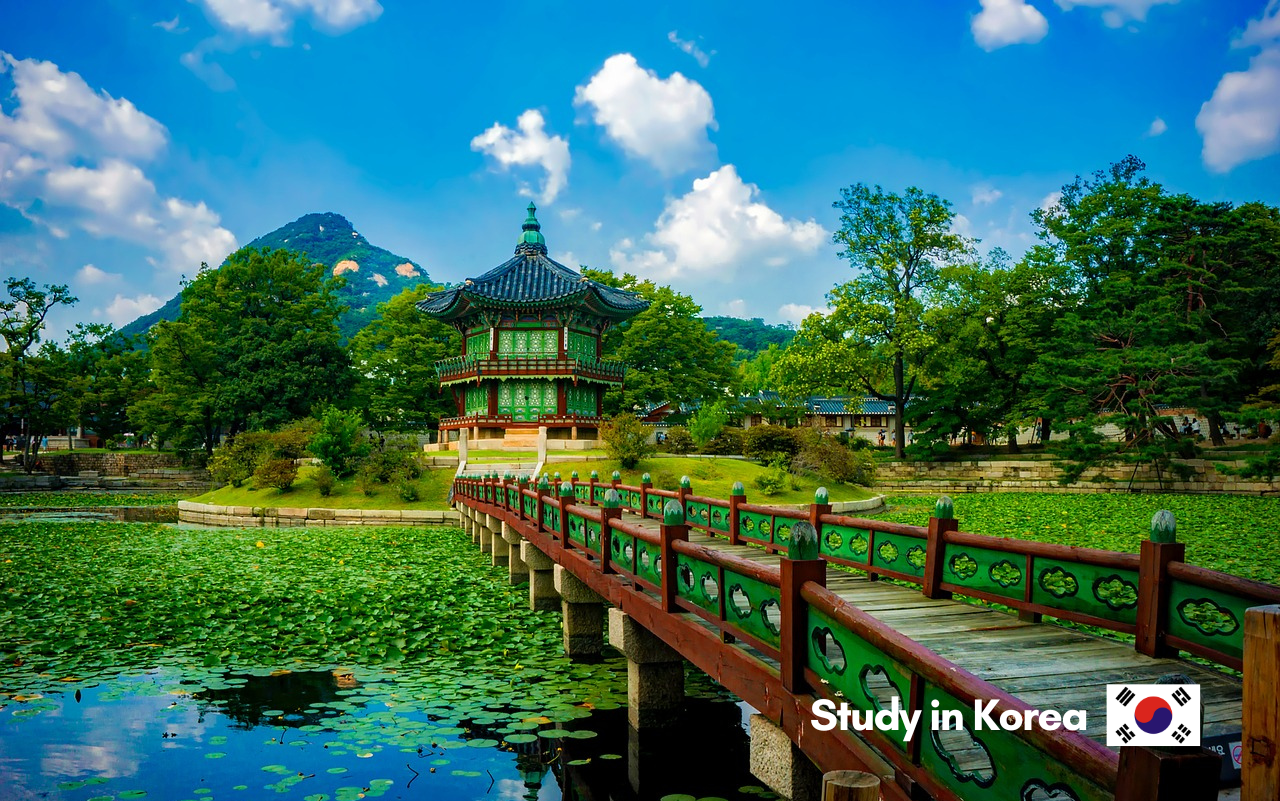
South Korea has quietly become one of the most compelling study destinations for Nepali students. It offers something most popular destinations do not: a combination of genuinely world-class universities, tuition fees and living costs that are lower than Australia, Canada, or the UK, one of the world's most generous government scholarship programs, and a post-study job market anchored by global corporations like Samsung, Hyundai, LG, and SK Group.
Over 6,000 students from Nepal were studying in South Korea across undergraduate, master's, and PhD programs in 2024, and the number continues to grow. This guide covers everything a Nepali student needs to plan, apply, and prepare: universities, entry requirements, costs, the GKS scholarship, the visa process, Korean language requirements, work rights, and what life actually looks like on the ground.
Why Study in South Korea?
South Korea consistently ranks among Asia's top education systems. Seoul National University and Yonsei University are among the top 50 universities worldwide as per QS World Rankings 2026. KAIST and POSTECH are globally recognized for science and technology research at a level comparable to MIT and Caltech.
Beyond university rankings, there are five practical reasons South Korea stands out for Nepali students specifically:
- Cost is lower than Western destinations. Annual tuition at public universities starts from around KRW 4,000,000 (roughly NPR 4 lakhs or USD 3,000) and living costs in most cities outside Seoul are significantly more manageable than in Sydney, Toronto, or London.
- The GKS scholarship is one of the world's most comprehensive. The Korean government's Global Korea Scholarship covers full tuition, round-trip airfare, monthly living allowance, Korean language training, and health insurance. It is open to Nepali students at both undergraduate and graduate levels.
- Technology and industry exposure is unique. Interning at or near companies like Samsung, Hyundai, or LG while studying in Korea provides a type of industry proximity that few other countries can match for engineering, business, and design students.
- Post-study pathways have improved. From 2025, new policies allow international graduates to stay in Korea for up to three years while seeking employment, a major boost for students in STEM and other high-demand fields.
- Korean language skills open significant doors. Students who develop TOPIK Level 3 or above by graduation are substantially more competitive in Korea's job market and in Nepal's growing Korean-language service sector.
Top Universities in South Korea for International Students
| University | Location | Known For | QS 2026 Ranking |
|---|---|---|---|
| Seoul National University (SNU) | Seoul | Engineering, Science, Business, Medicine | Top 50 globally |
| KAIST | Daejeon | Science, Technology, Engineering, AI | Top 50 globally |
| Yonsei University | Seoul | Medicine, Social Sciences, Business, Law | Top 100 globally |
| Korea University | Seoul | Law, Business, International Studies | Top 100 globally |
| POSTECH | Pohang | Science, Technology, Research | Top 150 globally |
| Sungkyunkwan University (SKKU) | Seoul / Suwon | Humanities, Business, Engineering | Top 150 globally |
| Hanyang University | Seoul | Engineering, Design, Architecture | Top 200 globally |
| Ewha Womans University | Seoul | Humanities, Social Sciences, Arts | Top 300 globally |
SNU, Yonsei, and Korea University are informally known as the "SKY" universities, South Korea's equivalent of the Ivy League. They are highly competitive for international applicants and typically require strong GPAs and language proficiency scores. For Nepali students targeting research-focused programs, KAIST and POSTECH offer English-medium graduate programs with strong research funding.
Academic Calendar and Intakes
South Korea's academic year runs on a semester system:
| Semester | Period | Application Window |
|---|---|---|
| Spring (primary intake) | March to June | September to November of the prior year |
| Fall (popular with international students) | September to December | March to May |
Fall intake in September is the most popular for international students. You should start your application 6 to 9 months ahead. Most international scholarship programs, including the GKS, align with the spring intake, so if you are targeting a scholarship, the spring semester is more important to plan around.
Admission Requirements for Nepali Students
Undergraduate programs
- Completed +2 or A-Levels (Grade 12 or equivalent)
- Minimum GPA of 2.5 to 3.0 out of 4.0, though competitive universities expect higher
- English proficiency: IELTS 5.5 to 6.0 or TOEFL iBT 71 to 80 for English-medium programs, OR TOPIK Level 3 or above for Korean-medium programs
- Personal statement or study plan
- Academic transcripts and certificates
- Copy of passport
Postgraduate (Master's and PhD) programs
- Bachelor's degree in a relevant field (Master's) or Master's degree (PhD)
- Minimum GPA of 3.0 out of 4.0
- English proficiency: TOEFL iBT 80 or above, or IELTS 6.0 or above for English-medium programs
- TOPIK Level 3 or above for Korean-medium programs; Level 4 preferred at competitive institutions
- Research proposal (for research-based programs)
- Two or three letters of recommendation
- CV or academic resume
Requirements vary between institutions and programs. Always verify directly with your target university's international admissions office. Some universities offer conditional admission pending language score submission.
TOPIK: The Korean Language Test
TOPIK stands for Test of Proficiency in Korean. If you are applying to a Korean-medium program, TOPIK is the primary language requirement rather than IELTS or TOEFL. Even for English-medium programs, having a TOPIK certificate significantly strengthens your visa application and your integration into campus life.
| TOPIK Level | What It Means | Typical Use |
|---|---|---|
| Level 1 to 2 (TOPIK I) | Basic communication ability | Useful as supplementary evidence; not sufficient for academic programs |
| Level 3 to 4 (TOPIK II) | Intermediate; can handle academic and social situations | Minimum required for Korean-medium undergraduate programs; Level 4 preferred for graduate programs |
| Level 5 to 6 (TOPIK II) | Advanced; near-native academic and professional competency | Required for highly competitive programs; also earns an additional monthly stipend under GKS |
TOPIK is offered in Nepal through authorized test centers. If you are starting from zero Korean knowledge, many Nepali students begin Korean language classes at institutes in Kathmandu before applying, or enroll in a D-4 language training visa program in Korea first and transition to a D-2 degree visa after achieving the required level.
The D-4 to D-2 pathway is common among Nepali students. It involves arriving in Korea on a D-4 language visa, attending a university-affiliated Korean language institute for one year, reaching TOPIK Level 3 or above, and then applying to a degree program. The GKS scholarship also includes a mandatory one-year Korean language training component for all scholars.
Tuition Fees in South Korea
South Korea has two types of universities: public (national) and private. Public universities are generally more affordable and include SNU, KAIST, and POSTECH.
| University Type | Level | Per Semester (KRW) | Per Semester (approx. USD) | Per Semester (approx. NPR) |
|---|---|---|---|---|
| Public university | Undergraduate | KRW 2,000,000 to 5,000,000 | USD 1,500 to 3,800 | NPR 2 to 5 lakhs |
| Public university | Graduate | KRW 2,500,000 to 6,000,000 | USD 1,900 to 4,600 | NPR 2.5 to 6 lakhs |
| Private university | Undergraduate | KRW 3,000,000 to 7,000,000 | USD 2,300 to 5,400 | NPR 3 to 7 lakhs |
| Private university | Graduate | KRW 4,000,000 to 8,000,000 | USD 3,100 to 6,200 | NPR 4 to 8 lakhs |
Most programs run two semesters per year, so annual tuition typically ranges from KRW 4,000,000 to KRW 16,000,000 (approximately NPR 4 to 16 lakhs or USD 3,000 to 12,400). Engineering, medicine, and fine arts programs are usually at the higher end. Humanities and social sciences tend to be lower. Some universities charge additional fees for enrollment, health insurance, and student union contributions on top of tuition.
Cost of Living in South Korea
Living costs vary significantly depending on the city. Seoul is the most expensive. Cities like Daejeon, Daegu, and Gwangju offer noticeably lower costs for the same quality of life.
| Expense Category | Monthly Cost (USD) | Monthly Cost (approx. NPR) |
|---|---|---|
| Accommodation (university dorm) | USD 150 to 350 | NPR 20,000 to 47,000 |
| Accommodation (private, off-campus) | USD 300 to 700 | NPR 40,000 to 94,000 |
| Food (home-cooked and dining out mix) | USD 150 to 300 | NPR 20,000 to 40,000 |
| Transportation (T-money card) | USD 40 to 70 | NPR 5,400 to 9,400 |
| Internet and phone | USD 30 to 50 | NPR 4,000 to 6,700 |
| Personal expenses | USD 50 to 100 | NPR 6,700 to 13,400 |
| Total (estimated monthly) | USD 500 to 1,100 | NPR 67,000 to 1.5 lakhs |
University dormitories are the most cost-effective housing option for new international students. Dormitory places are limited and competitive, so apply for one as early as possible after receiving your admission offer. Off-campus options include goshiwon (small furnished single rooms, cheap but compact), one-room apartments, and shared flats.
Health insurance is mandatory for all international students in South Korea. Health insurance costs approximately KRW 430,000 to 500,000 per year (roughly NPR 43,000 to 50,000), ensuring access to Korea's high-quality healthcare system.
Total Estimated Cost to Study in Korea from Nepal (Per Year)
| Expense | Estimated Annual Amount (USD) | Approx. (NPR) |
|---|---|---|
| Tuition (public university, mid-range) | USD 3,000 to 7,500 | NPR 4 to 10 lakhs |
| Living expenses | USD 6,000 to 10,000 | NPR 8 to 13.5 lakhs |
| Health insurance | USD 330 to 380 | NPR 44,000 to 51,000 |
| Visa and application fees | USD 100 to 200 | NPR 13,000 to 27,000 |
| Round-trip flight (Kathmandu to Seoul) | USD 500 to 900 | NPR 67,000 to 1.2 lakhs |
| Total (first year estimate) | USD 10,000 to 19,000 | NPR 13.5 to 25.5 lakhs |
Private university programs, specialized courses (medicine, architecture, fine arts), or Seoul-based accommodation can push total costs closer to USD 20,000 to 25,000 per year. If you secure even a partial scholarship, costs drop significantly. The GKS scholarship can reduce your out-of-pocket annual cost to near zero.
Scholarships for Nepali Students in South Korea
1. Global Korea Scholarship (GKS) - the most important one to know
The Global Korea Scholarship, also known as KGSP, is the Korean government's flagship fully-funded scholarship for international students. It is the most valuable scholarship available to Nepali students going to Korea and covers almost every expense involved.
GKS benefits include:
- Full tuition for the entire program duration
- Round-trip economy airfare to and from Korea
- Monthly living allowance (approximately KRW 900,000 to 1,000,000 per month for graduate students)
- One-year Korean language training program at a university language institute, fully funded
- Medical insurance throughout the scholarship period
- Settlement allowance upon arrival
- Degree completion grant upon graduation
- Additional Korean proficiency grant for students who achieve TOPIK Level 5 or 6
There are two application tracks: the Embassy Track (apply through the Korean Embassy in Kathmandu) and the University Track (apply directly to a participating Korean university). For the 2026 GKS Graduate program, 4 slots are available through the Embassy Track for Nepal. For undergraduate, 2 slots are available through the Embassy Track for Nepal (General 1 and R-GKS 1). Slots through the University Track are separate and may offer more opportunities.
GKS eligibility for Nepali students (graduate level):
- Nepali citizen; neither applicant nor parents should hold Korean citizenship
- Under 40 years of age for graduate applicants
- Under 25 years of age for undergraduate applicants
- CGPA of 80% or higher on a 100-point scale, or ranked in the top 20% of your class
- No previous GKS scholarship recipients are eligible to apply again
- All required certificates must be attested by Nepal's Ministry of Foreign Affairs (MoFA) before submission
Apply through the Study in Korea website at studyinkorea.go.kr and check the official Korean Embassy in Nepal website for country-specific deadlines and quotas.
2. University scholarships
Most major Korean universities including SNU, Yonsei, Korea University, KAIST, and Sungkyunkwan offer their own international student scholarships ranging from 30% to 100% tuition waivers based on academic merit. These are separate from GKS and available to students who do not win the government scholarship. Check each university's international student office website for current offerings and deadlines.
3. KOICA and research assistantships
The Korea International Cooperation Agency (KOICA) offers scholarship programs focused on development-related fields. Many Korean graduate programs also provide research assistantships that cover tuition and provide a monthly stipend in exchange for lab or research work. If you are applying to a KAIST or POSTECH PhD program, contact professors directly about research funding before applying.
South Korea Student Visa for Nepali Students
There are two main visa types for Nepali students going to Korea:
D-2 Visa (Degree Program)
The D-2 visa is for students enrolled in a formal degree program at an accredited Korean university. D-2 subcategories include D-2-1 for junior college, D-2-2 for undergraduate, D-2-3 for graduate school, D-2-4 for general graduate school, D-2-5 for research training, and D-2-6 for industrial cooperation courses. It covers the full duration of your degree.
D-4 Visa (Language Training)
The D-4 is the most common starting point for Nepali students. It is issued for enrollment in Korean language programs at university-affiliated language institutes. No prior Korean knowledge is required for a D-4 application. Many Nepali students use the D-4 pathway: arrive, complete language training, reach TOPIK Level 3 or higher, and then switch to a D-2 visa for a degree program.
Documents required for both D-2 and D-4 visas
- Valid passport (minimum 6 months validity beyond planned stay)
- Admission or enrollment letter from the Korean institution
- Academic transcripts and certificates
- Financial proof showing sufficient funds (typically USD 10,000 or equivalent in KRW in a bank statement)
- Medical examination certificate from an authorized hospital
- Completed visa application form and passport photos
- Visa application fee payment
For D-2 applicants going to Korean-medium programs, TOPIK Level 3 proof is typically also required. Credit requirements for Nepali students have become stricter, and proof of Korean language proficiency such as TOPIK or Sejong Institute certificates is increasingly required at the visa stage.
Submit your visa application at the Embassy of the Republic of Korea in Kathmandu. Processing typically takes 4 to 6 weeks. Apply well before your program start date.
Important: Batch visa submission for D-2
Universities can submit up to 50 student visa applications in bulk during specific periods. Only one Nepali representative is allowed to handle the submission at the embassy. Universities must submit a list of students and required information by email during the application period. If you are applying individually rather than through a batch, book your own appointment at the Korean Embassy directly.
Working While Studying in South Korea
International students in South Korea are permitted to work part-time, but you must obtain permission before starting any work.
- Up to 20 hours per week during regular semesters
- Unlimited hours during official vacation periods
- You must first obtain your Alien Registration Card (ARC) after arriving in Korea, then apply for part-time work permission through your university's Global Service Center (GSC) or immigration office
Common part-time jobs for international students in Korea include: convenience stores, cafes and restaurants, English tutoring, translation work, and university research assistant positions. Your income from part-time work can meaningfully offset monthly living costs, particularly if you are in a lower-cost city.
After Graduation: Staying in Korea and Career Paths
After finishing your degree, you can apply for a D-10 job-seeking visa, which lets you stay in Korea for 6 to 12 months while looking for employment. From 2025, new policies also allow international graduates to stay in Korea for up to three years while seeking employment, a major boost for students in STEM and other high-demand fields.
Once you secure a job, you can switch to an E-series work visa appropriate to your field: E-2 for language instructors, E-7 for skilled professionals in engineering, IT, or business, and other categories depending on your qualifications. Knowing Korean at TOPIK Level 3 or above significantly improves your employment prospects in Korea.
For students who return to Nepal, a Korean degree carries strong value particularly in IT, engineering, business, education, and the expanding Korean-language industry in Nepal. The presence of Korean investment and Korean joint ventures in Nepal has grown steadily, creating demand for Nepali professionals with Korean language and academic credentials.
Student Life in South Korea
Campus life
Korean universities have active campus cultures with hundreds of student clubs spanning sports, music, gaming, academic research, volunteer work, and cultural activities. University festivals, called Daedong-je, are major events where Korean students perform K-pop covers, invite artist guests, and organize campus-wide celebrations. Participating in clubs is one of the fastest ways to build friendships with Korean students and improve your language skills naturally.
Food and daily life
Korean food is diverse, widely available, and affordable. University cafeterias typically offer full meals for KRW 3,000 to 5,000 (roughly NPR 300 to 500). Street food, convenience stores, and local restaurants are economical options. Most Nepali students note that the food adjustment is manageable, and Kathmandu-style Nepali and Indian food is available in areas with significant South Asian communities, particularly in Itaewon and Ansan.
Transport
South Korea's public transport system is excellent and inexpensive. Seoul's subway and bus network covers virtually the entire city and connects to other major cities. A T-money transportation card is rechargeable and accepted on all public transport. Taxis are widely available and reasonably priced by regional standards.
Safety and environment
South Korea is one of the safest countries in the world for international students. Crime rates are very low, the healthcare system is high quality and accessible, and the country's infrastructure is modern and efficient.
Challenges to Prepare For
- Korean language barrier: Outside of university campuses and Seoul's international areas, English is limited. For daily life including doctor visits, administrative tasks, and shopping outside tourist areas, Korean is essential. Starting Korean language study before arrival, even basic Level 1, makes the adjustment significantly smoother.
- Academic pressure: Korean universities are academically rigorous with high expectations for attendance, assignments, and exams. The study culture in Korea is intensive. Be prepared for a more demanding academic environment than most Nepali students are used to.
- Cultural adjustment: Korean society has a hierarchical social structure based on age and seniority. Concepts like using formal language with older people, bowing as a greeting, and group-oriented social norms are genuinely different from Nepali culture and require some adjustment.
- Visa and immigration strictness: South Korean immigration authorities track student attendance and academic performance closely. Students who miss too many classes or fail academically can face visa status issues. Take the immigration compliance requirements seriously from day one.
Practical Tips for Nepali Students Going to Korea
- Start Korean language study now. Even reaching TOPIK Level 1 before arrival reduces culture shock dramatically. Free resources include the Talk To Me In Korean website and the Sejong Institute's online curriculum.
- Download these apps before arrival: Naver Map for navigation (Google Maps is less accurate in Korea), KakaoTalk for messaging (the primary chat platform in Korea), Papago for translation, and Coupang for online shopping.
- Apply for university dormitories immediately. Dormitory spots fill fast. As soon as you receive your admission confirmation, submit your dormitory application. Do not assume you will get a place if you wait.
- Get your Alien Registration Card (ARC) within 90 days of arrival. The ARC is your primary ID in Korea and is required for banking, phone contracts, part-time work permission, and healthcare. Visit the local immigration office within the first few weeks.
- Attend all university orientation sessions. Korean universities run comprehensive orientations for international students. These sessions cover academic rules, immigration requirements, campus resources, and language support. Missing them costs you information that is genuinely hard to find independently.
- Budget carefully. Consumer culture in Korea is strong. Online shopping, convenience stores, and delivery apps make it very easy to overspend. Set a monthly budget before you arrive and track it from week one.
Popular Cities for Nepali Students
| City | Character | Best For |
|---|---|---|
| Seoul | Large, fast-paced, global, expensive | Top universities, internship opportunities, international community, all industries |
| Daejeon | Mid-sized, tech-focused, affordable | KAIST, government research institutes, STEM students |
| Pohang | Small, industrial, focused | POSTECH students, science and engineering research |
| Busan | Coastal, relaxed, second largest city | Strong universities, lower cost than Seoul, international film and culture scene |
| Daegu | Traditional culture meets modern city | More affordable, good universities, less tourist-heavy |
| Incheon | Port city, international campus zone | Close to Seoul, global campus environment, Songdo international district |
Next Steps
If South Korea matches your academic and career goals, the best sequence to start with is:
- Research your target university and program and confirm the language requirements and intake deadlines
- Begin Korean language study if you are targeting a Korean-medium program or the D-4 pathway
- Prepare your academic documents: transcripts, certificates, and equivalence documentation if needed
- Apply for GKS scholarship if eligible, well ahead of the embassy deadline
- Obtain your NOC after receiving your offer letter
- Apply for the D-2 or D-4 visa at the Korean Embassy in Kathmandu
For help with university selection, GKS scholarship applications, TOPIK preparation, and visa documentation for South Korea, compare verified consultancies on ConsultancyHunt that specialize in Korea-bound students:
Find a Korea-Specialist Consultancy in NepalAlso Read
Last updated: April 2026. University admission requirements, visa regulations, scholarship quotas, and tuition fees are subject to change. Always verify current requirements directly with your target Korean university and the Embassy of the Republic of Korea in Kathmandu before applying.