Study in Denmark from Nepal
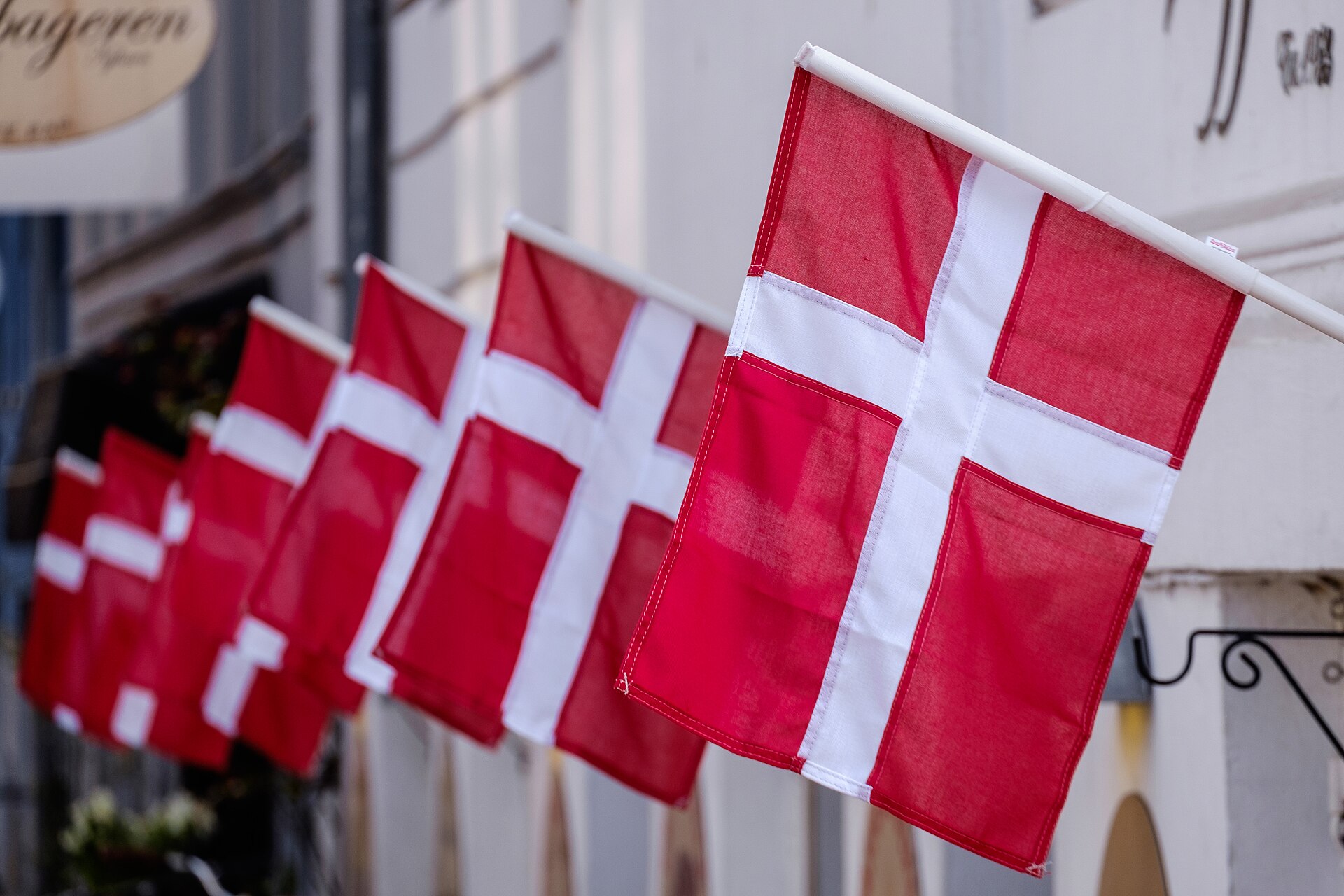
Denmark has been growing steadily as a study destination for Nepali students, and in 2026 it stands out for one reason that matters more than any other: the visa system is process-driven, not quota-driven. There is no annual cap on Danish student residence permits the way there is for some other European countries. If your documents are in order, your finances are genuine, and your academic profile meets the program requirements, your application is assessed on those merits alone.
The Danish student visa success rate from Nepal ranges from 75% to 90% overall, with master's program applicants seeing approval rates as high as 95%. That is higher than nearly every comparable European destination. For Nepali students who want a structured, achievable pathway to a European education and post-study work rights, Denmark is one of the most realistic options available in 2026.
This guide covers everything you need to know before you apply: why Denmark works for Nepali students, which universities and programs to target, the exact financial requirements, available scholarships, the complete visa application process, and what life and work opportunities look like after graduation.
Why Study in Denmark from Nepal?
- No annual cap on student residence permits. Unlike Canada, the UK, or Australia, Denmark does not impose a quota on international student approvals. Applications are processed based on individual merit and documentation quality.
- Over 700 programs taught entirely in English. You do not need to speak Danish to study or work in Denmark. Most universities operate in English at postgraduate level, and faculty across all major institutions are proficient in English.
- High visa approval rate. The overall Danish student visa success rate from Nepal is 75% to 90%. For master's program applicants with strong academic records and complete documentation, approval rates reach 95%.
- Legal right to work 20 hours per week during studies. International students can work up to 20 hours per week during the academic semester and full-time in June, July, and August. Minimum hourly wages in Denmark are among the highest in Europe, ranging from DKK 120 to DKK 160 per hour in most student-accessible roles.
- 3-year post-graduation job-seeking permit. After completing a bachelor's, master's, or PhD at a Danish institution, non-EU graduates can apply for a residence permit of up to 3 years to seek employment in Denmark. This is one of the most generous post-study work rights in Europe.
- Study gap of 2 to 3 years accepted. Most Danish universities accept study gaps of up to 3 years without requiring special explanation. Gaps beyond this are assessed individually and are frequently approved with documented reasons such as work experience.
- Dependent visa available. Students can bring immediate family members (spouse and children under 18) to Denmark. Dependents are permitted to work full-time.
Intakes for International Students in Denmark
| Intake | Start Month | Program Availability | Apply By |
|---|---|---|---|
| Fall (primary) | September | Full range of bachelor's, master's, and PhD programs. Widest scholarship availability. Most popular among Nepali students. | October to March of the prior year. Competitive programs at DTU and UCPH close as early as January or February. |
| Winter (secondary) | February | Selective. Available at some universities for specific programs. Less common than September. | August to October |
Apply at least 6 to 9 months before your target intake. After receiving your acceptance letter, the visa processing adds another 60 days minimum. Leaving insufficient time is one of the most common and preventable problems Nepali applicants face.
Top Universities in Denmark for Nepali Students
| University | Location | Known For | Notes for Nepali Students |
|---|---|---|---|
| University of Copenhagen (UCPH) | Copenhagen | Life sciences, humanities, law, social sciences, medicine | Denmark's highest-ranked university. Highly competitive. Government scholarship recipients typically have top-percentile academic profiles. Strong English-taught master's range. |
| Technical University of Denmark (DTU) | Lyngby (near Copenhagen) | Engineering, IT, sustainability, food science, physics | World top 150 for engineering. Heavily industry-linked. Vestas, Orsted, and Novo Nordisk actively recruit DTU graduates. Strong for renewable energy and computer engineering. |
| Aarhus University | Aarhus | Business, natural sciences, law, social sciences | Denmark's second-largest university. More affordable city than Copenhagen. Merit scholarships available for non-EU students. |
| Copenhagen Business School (CBS) | Copenhagen | Business, finance, economics, management | One of the largest business schools in Europe. CBS scholarships available for academically strong non-EU applicants. |
| University of Southern Denmark (SDU) | Odense | Health sciences, engineering, social sciences | Actively participates in the Danish Government Scholarship program. SDU scholarship deadline is typically February each year. Odense has significantly lower living costs than Copenhagen. |
| Aalborg University (AAU) | Aalborg | Engineering, IT, architecture, social sciences | Known for problem-based learning. Strong for applied engineering and IT programs. Aalborg is the most affordable major Danish city for students. |
Best Programs for Nepali Students in Denmark
Denmark's post-graduation job-seeking permit applies to graduates of any bachelor's, master's, or PhD program from a publicly accredited Danish institution. Unlike Canada's post-graduation work permit, Denmark does not impose field-of-study restrictions. Any full degree from an accredited institution qualifies. This makes program selection considerably more flexible.
| Field | Level | Post-Study Employment Demand | Notes |
|---|---|---|---|
| Computer Science and IT | Bachelor's, Master's | Very high. Growing tech sector with shortage of software engineers and data specialists. | DTU, AAU, and IT University Copenhagen are strongest. Nordic tech companies actively recruit internationally. |
| Engineering (Mechanical, Electrical, Civil, Environmental) | Bachelor's, Master's | High. Denmark is home to global companies including Vestas, Grundfos, and Danfoss. | DTU is the premier engineering institution. Aarhus and AAU also have strong programs. |
| Renewable Energy and Sustainability | Master's | Very high. Denmark is a world leader in wind and clean energy. | DTU's sustainable energy programs are globally respected. Denmark targets 100% renewable energy by 2030, driving consistent employer demand. |
| Business and Finance | Master's | Moderate to high. Finance, consulting, and logistics roles in Copenhagen and Aarhus. | CBS is the strongest institution for business. MSc Finance and MBA graduates have consistent employer networks in Copenhagen. |
| Data Science and AI | Master's | High and growing. Danish companies across healthcare, logistics, and energy invest heavily in data roles. | Offered at UCPH, DTU, and AAU. One of the fastest-growing employment areas in the Danish labor market. |
| Health Sciences and Nursing | Bachelor's, Master's | High. Denmark faces shortages in nursing and allied health. | Recognition and licensing requirements apply for clinical roles. SDU and UCPH are primary institutions. |
Admission Requirements for Nepali Students
Undergraduate (Bachelor's degree)
- Completed Class 12 (10+2) with a minimum of 60% marks. Competitive programs at UCPH and DTU expect 70% or above.
- Academic transcripts and certificates from Class 10 and Class 12
- Personal statement or motivation letter, valid passport
English proficiency for undergraduate:
- IELTS Academic: 6.0 to 6.5 overall
- TOEFL iBT: 83 or above
- PTE Academic: 58 or above
Postgraduate (Master's degree)
- Completed bachelor's degree with GPA of 2.4 or above on a 4.0 scale. Competitive programs at UCPH, DTU, and CBS expect 3.0 or above.
- Statement of purpose, CV or resume, two letters of recommendation, academic transcripts, valid passport
- Work experience recommended for MBA programs, typically 2 years
English proficiency for postgraduate:
| Test | Minimum Score | Notes |
|---|---|---|
| IELTS Academic | 6.5 overall | Some programs (DTU, UCPH) require 7.0. Always check the specific program page. |
| TOEFL iBT | 83 to 90 | No section score below 20 at most institutions. |
| PTE Academic | 58 to 62 | Accepted at most universities. Verify with your specific program. |
Always verify requirements on your target program's official admissions page. Requirements vary significantly between programs within the same university.
Cost of Studying in Denmark
Tuition fees for international students (annual)
Denmark provides free tuition for EU and EEA students. As a Nepali student, you pay full tuition as a non-EU citizen.
| Program Level | Annual Tuition (DKK) | Approx. in EUR | Approx. in NPR |
|---|---|---|---|
| Bachelor's | DKK 45,000 to 90,000 | EUR 6,000 to 12,000 | NPR 9.6 to 19.2 lakh |
| Master's | DKK 60,000 to 120,000 | EUR 8,000 to 16,000 | NPR 12.8 to 25.6 lakh |
| PhD | Fully funded in most cases | PhD positions are salaried employment contracts | Monthly salary of DKK 28,000 to 35,000 (approx. NPR 5 to 6.3 lakh) before tax |
PhD programs in Denmark are a genuine exception: most PhD positions are structured as employment contracts where the university pays you a monthly salary to conduct research. You do not pay tuition. If you have a strong research background and a compelling proposal, a funded PhD is one of the most financially viable ways to study in Denmark.
Living expenses (monthly)
| Expense | Monthly (DKK) | Monthly (NPR approx.) |
|---|---|---|
| Accommodation (shared apartment or student dorm) | DKK 2,500 to 5,000 | NPR 45,000 to 90,000 |
| Food and groceries | DKK 1,500 to 2,500 | NPR 27,000 to 45,000 |
| Transport | DKK 400 to 700 | NPR 7,200 to 12,600 |
| Health insurance | DKK 80 to 130 | NPR 1,500 to 2,400 |
| Personal and miscellaneous | DKK 500 to 800 | NPR 9,000 to 14,400 |
| Total monthly estimate | DKK 6,000 to 8,000 | NPR 1.08 to 1.44 lakh |
Copenhagen is Denmark's most expensive city. Aarhus, Odense, and Aalborg are 20% to 30% more affordable on accommodation and daily expenses while offering comparable quality of life and strong university options. If budget is a priority, SDU in Odense and AAU in Aalborg are worth considering over Copenhagen-based institutions.
First-year total cost estimate
| Expense | Estimated Cost (DKK) | Approx. (NPR) |
|---|---|---|
| Annual tuition (master's, mid-range) | DKK 80,000 to 100,000 | NPR 14.4 to 18 lakh |
| Financial proof requirement (DKK 7,426 x 12 months) | DKK 89,112 | NPR 15.3 lakh (bank balance, not spent) |
| Residence permit application fee | DKK 1,900 (approx. EUR 255) | NPR 34,000 |
| Health insurance (annual) | DKK 1,000 to 1,500 | NPR 18,000 to 27,000 |
| Round-trip airfare | DKK 8,000 to 14,000 | NPR 1.4 to 2.5 lakh |
| Initial setup costs (accommodation deposit, SIM, essentials) | DKK 5,000 to 10,000 | NPR 90,000 to 1.8 lakh |
Note: The DKK 89,112 financial proof requirement is a bank balance you must demonstrate to Danish immigration, not a deposit or investment scheme. The funds remain in your or your sponsor's account. You need to show this balance genuinely exists across consistent statements, not as a last-minute large transfer.
Scholarships in Denmark for Nepali Students
Scholarships are available but competitive, and most are aimed at master's and PhD applicants. Below are the main options Nepali students realistically qualify for.
1. Danish Government Scholarships for Highly Qualified Non-EU/EEA Students
The most significant scholarship available to Nepali students. Danish universities receive a limited number of government scholarship slots each year, which they allocate to the most academically outstanding non-EU applicants. The scholarship covers full tuition and provides a monthly stipend toward living costs.
- Level: Master's programs primarily. Some PhD positions.
- Coverage: Full tuition waiver plus monthly living allowance
- Deadline: 31 May 2026 for the current cycle
- How to apply: No separate application form. You are automatically considered when you apply for a master's program at a participating Danish university. The university selects recipients from the admissions pool.
- Eligibility: Must be a non-EU/EEA citizen enrolled in a full-degree program and hold a time-limited residence permit for study purposes.
- Reality check: This is highly competitive. At the University of Copenhagen Faculty of Science, 2025 scholarship recipients had GPAs in the 98th percentile. Apply with your strongest profile, but do not base your financial plan on receiving this award.
2. Erasmus Mundus Joint Master Degrees
Erasmus Mundus funds selected joint master's programs spanning multiple European countries. Several programs include Denmark as a study location. Awards cover full tuition, EU contribution to travel costs, and a monthly living allowance of approximately EUR 1,000 per month throughout the program.
- Level: Master's (specific joint programs only)
- Coverage: Full tuition plus travel allowance and monthly living stipend
- Open to: All nationalities including Nepal
- How to apply: Apply directly to the specific Erasmus Mundus program, not to individual universities. Each program has its own deadline, typically October to January for a September start.
3. University-Specific Scholarships
| University | Scholarship | Coverage | Key Notes |
|---|---|---|---|
| University of Copenhagen | Danish Government Scholarship (all faculties) | Full tuition plus living allowance | Automatically assessed at admission. Top-percentile GPA required. |
| University of Copenhagen | 2nd Year SCIENCE Scholarship | Tuition and living expenses for year 2 | Minimum 60 ECTS passed in year 1 with GPA of 11 or above on Danish grading scale |
| Copenhagen Business School | CBS Scholarship for Non-EU Students | Partial tuition fee reduction | Merit-based. Assessed at admission. No separate application. |
| Aarhus University | AU Government Scholarship | Full or partial tuition waiver | Automatically considered at admission. Contact admissions office to confirm availability for your program. |
| University of Southern Denmark | SDU Government Scholarship | Full tuition waiver | Master's level. Deadline typically February each year. Contact SDU admissions directly. |
4. Funded PhD Positions
PhD positions in Denmark are structured as employment contracts where the university pays you a monthly salary of DKK 28,000 to DKK 35,000 before tax, with tuition covered by the institution. For Nepali students with a strong master's degree and research background, applying for a funded PhD is the most financially viable and strategically sound route to studying in Denmark long-term.
Scholarship tips for Nepali applicants
- Apply between October and February for September intake. Universities evaluate scholarship eligibility at admission, so earlier applications get more consideration time.
- A strong, specific motivation letter that explains your research goals and why a particular Danish university fits your trajectory is a genuine differentiator. Generic motivation letters are recognized immediately.
- For research-based master's programs, contact the relevant department professor before submitting your formal application. A faculty member willing to support your application significantly improves both admission and scholarship chances.
- For PhD positions, identify professors whose active research aligns with your background and write to them with a concise research proposal before applying formally. Cold email outreach with a specific, relevant proposal is how most funded PhD positions in Denmark are secured.
Denmark Study Permit (Residence Permit) Application: Step-by-Step for Nepali Students
Nepal does not have a Danish embassy. All study permit applications from Nepali students are submitted online through the Danish Immigration Service (SIRI) at newtodenmark.dk, and physical documents and biometrics are submitted at VFS Global in Kathmandu. There is no in-person interview for most applicants.
Step-by-step process
- Receive your official Letter of Acceptance (LOA) from a Danish institution. You cannot begin the visa process without this. Confirm the institution is publicly accredited before applying.
- Pay your first semester's tuition fees. SIRI requires proof that you have paid at least the first semester's tuition before granting a residence permit. Your university will issue a payment receipt. This is a hard requirement, not optional.
- Confirm your financial proof. You must demonstrate access to DKK 7,426 per month for up to 12 months, totalling DKK 89,112 (approximately NPR 21 lakh). This must appear in your personal bank account or in your sponsor's account with a notarized sponsorship letter.
- Prepare and translate all documents. All documents not in English or Danish must be certified-translated and attested by the relevant Nepali government authority before submission.
- Apply online through SIRI at newtodenmark.dk. Pay the non-refundable application fee of approximately EUR 255 (NPR 36,000) at the time of submission.
- Book your VFS Global appointment in Kathmandu. After submitting online, schedule an appointment at VFS Global Kathmandu to submit physical documents and biometrics.
- Attend your VFS Global appointment. Provide fingerprints and a passport photo. Bring originals and copies of all documents.
- Wait for a decision. Standard processing time is approximately 60 days. Apply at least 3 to 4 months before your program start date.
- Receive your residence card after arrival. Visa approval is communicated electronically. After traveling to Denmark, collect your physical residence permit card from the local municipality office (Borgerservice).
Complete document checklist
- Valid passport (minimum 3 months validity beyond intended stay, at least 2 blank pages). Photocopies of all pages including the data page and any pages with stamps or previous visas.
- Official Letter of Acceptance (LOA) from your Danish institution
- Tuition fee payment receipt confirming first semester payment
- Proof of financial means: DKK 89,112 in bank statements (personal or sponsored)
- Bank statements for the past 6 months in your name or your sponsor's name
- Sponsorship letter with notarized declaration, sponsor's bank statements, and proof of relationship if a family member is funding your studies
- Academic transcripts and certificates from all completed educational levels
- English proficiency test result (IELTS, TOEFL, or PTE)
- Health insurance policy valid for Denmark for the duration of your stay
- Proof of accommodation in Denmark (dormitory confirmation, lease agreement, or institution housing letter)
- Passport-sized photographs meeting Danish visa specifications
- All Nepali-language documents certified-translated into English by an authorized translator and attested by the relevant Nepali government authority
Denmark Visa Success Rate and How to Maximize Your Chances
The Danish student residence permit success rate from Nepal is 75% to 90% overall. For master's program applicants with complete documentation and strong academic records, approval rates reach 95%. For bachelor's applicants, the range is 65% to 80%. Denmark's system is documentation-focused. Officers assess whether your application is complete, financially credible, and internally consistent.
Most refusals are preventable. The main reasons for rejection among Nepali applicants:
- Insufficient or suspicious financial proof. The DKK 89,112 requirement must be evidenced by organic, stable bank statements over at least 3 to 6 months. A sudden large deposit made immediately before applying is a major red flag that officers specifically look for.
- Missing or untranslated Nepali documents. Citizenship certificates, academic marksheets originally in Nepali, and other government documents must be certified-translated into English and attested. This step is frequently incomplete and causes delays or rejections.
- First semester tuition not paid before applying. This is a hard requirement in Denmark. SIRI requires documented proof of tuition payment before issuing a residence permit. Do not apply before this payment is confirmed and the receipt is in hand.
- Accommodation not confirmed. Danish immigration requires proof of where you will be living. A dormitory confirmation from your university or a signed lease agreement must be submitted with your application. Many students forget this step.
- Applying too late. Processing takes 60 days minimum. Students who begin the full process 4 to 5 months before their course start date have a safe margin. Applying 8 weeks before creates unnecessary risk.
Practical tips that genuinely help
- Maintain your bank balance stably for at least 3 to 6 months before applying. This is the single most controllable factor in your financial documentation quality.
- If a sponsor is covering your costs, prepare a notarized sponsorship declaration, the sponsor's 6-month bank statements, and clear documentary proof of the relationship between you and the sponsor. A letter without financial documentation is not sufficient.
- Get your Nepali documents attested early. The attestation process at relevant government offices in Nepal takes time, and leaving it to the last minute is a common bottleneck that delays entire applications.
- Confirm your accommodation before submitting your SIRI application. Contact your university's housing office early. University dormitories for international students fill quickly for September intakes.
- Choose a consultancy with specific Denmark track record. Consultancies that primarily handle Australia, Canada, and the UK may not be current on SIRI-specific documentation requirements and VFS Global procedures for Denmark.
Working While Studying in Denmark
- During the academic semester: Up to 20 hours per week (approximately 87 hours per month).
- During summer break (June, July, August): Full-time work with no hourly restriction.
- Earning potential: Most student-accessible jobs in retail, hospitality, warehousing, and campus roles pay DKK 120 to DKK 160 per hour. Working 20 hours per week at DKK 130 per hour generates approximately DKK 10,400 per month before tax, which covers a significant portion of monthly living costs.
- Common jobs for Nepali students: Restaurant and cafe work, supermarket roles (Netto, Lidl, Rema 1000), warehouse and logistics, university campus positions, tutoring, and IT internships for students in relevant programs.
Work experience gained during your student residence permit period does not directly contribute to a Danish permanent residency application the way it would in Canada's experience-based PR system. However, part-time work during studies builds professional networks, Danish language exposure, and income that meaningfully offsets living costs.
Post-Graduation Work Rights and Pathway to Permanent Residency
The 3-year job-seeking permit
After completing a bachelor's, master's, or PhD degree at a publicly accredited Danish institution, non-EU graduates can apply for a residence permit of up to 3 years to seek employment in Denmark. This permit allows full-time work for any employer without needing a separate work authorization. You can begin working as soon as you apply for the permit after graduating; you do not need to wait for it to be fully processed.
This replaced the earlier Establishment Card scheme, which closed to new applicants from April 2023. The 3-year job-seeking period is one of the most generous post-study work arrangements in Europe.
Transitioning to a work permit
After securing employment in Denmark on your job-seeking permit, you transition to a regular Danish work permit. The main routes for international graduates:
- Pay Limit Scheme: A work permit for employees earning above DKK 552,000 per year (approximately DKK 46,000 per month before tax). No labor market test required. Valid for 2 years and renewable.
- Positive List: A work permit for occupations on Denmark's official shortage occupation list. Updated regularly by SIRI. Currently includes engineering, IT, healthcare, and skilled trades. Salary must follow Danish collective agreements but there is no fixed minimum salary threshold.
- Fast-Track Scheme: Available to employees of SIRI-certified Danish companies. Faster processing and flexible conditions.
Permanent residency in Denmark
Denmark's permanent residency requires a minimum of 8 years of continuous temporary residence in most cases, or 4 years under an accelerated route for applicants who meet additional conditions including Danish language test scores, full-time employment, self-sufficiency, and a clean record. The 4-year route is achievable for Nepali graduates who commit to building their career in Denmark from the point of graduation. Permanent residency in Denmark also provides access to the Schengen area and, after additional years, a pathway to Danish citizenship.
Major Danish employers that consistently hire international graduates include Vestas (wind energy), Maersk (shipping and logistics), Novo Nordisk (pharmaceuticals), Orsted (clean energy), Grundfos (pumps and water solutions), Danfoss (energy systems), and Ramboll (engineering consultancy). Danish language proficiency significantly improves employment prospects even in roles primarily conducted in English.
Student Life in Denmark
Denmark consistently ranks among the world's safest and happiest countries, and this translates directly into student life. Cities are clean, public transport is reliable and well-integrated, and the healthcare system is strong. International students in Denmark are entitled to access public healthcare once they have a registered Danish address (CPR number).
Danish universities have well-developed international student support structures, including dedicated international offices, orientation programs at the start of each intake, academic counseling, career services, and mental health support. Aarhus University, DTU, and UCPH all run structured programs specifically for non-EU students.
The Nepali student community in Denmark is smaller than in the UK, Australia, or Canada, but it is established and growing. Copenhagen, Aarhus, and Odense have Nepali student associations and informal networks that provide support for new arrivals. Most integration happens through university social programs and workplace connections.
Danish winters are cold but manageable. Copenhagen and most of Denmark experience temperatures between 0 and minus 5 degrees Celsius from December to February. Snowfall is moderate compared to Canada or northern Scandinavia. Pack proper winter clothing before departure.
Before You Apply: Practical Checklist
- Choose a program at a publicly accredited Danish institution. Non-state-recognized institutions do not qualify for the post-graduation job-seeking permit.
- Check the specific program's English language requirements on the university's official admissions page. Some programs at UCPH and DTU require IELTS 7.0, not 6.5.
- Prepare for IELTS or PTE well in advance. Target IELTS 6.5 minimum for master's programs and IELTS 6.0 for bachelor's. Start preparation at least 3 to 4 months before you need the score.
- Apply to your target university between October and February for the September intake. Competitive programs close early.
- After receiving your LOA, pay your first semester's tuition fees before starting the SIRI visa application. This payment cannot be skipped or deferred.
- Build and document your financial proof (DKK 89,112) across 3 to 6 months of consistent bank statements. Avoid sudden large transfers made only for the visa.
- Get all Nepali-language documents attested and certified-translated into English well before your application date. This step takes more time than most students expect.
- Confirm your accommodation in Denmark before submitting your SIRI application. Do not apply without an accommodation confirmation letter or dormitory booking.
- Book your VFS Global Kathmandu appointment after submitting your online SIRI application. Apply at least 3 to 4 months before your program start date to allow 60 days of processing time.
Next Steps
Denmark's process rewards preparation. Program selection, financial documentation, early university applications, certified translations, and accommodation confirmation all require lead time. Working with a consultancy that has specific Denmark experience reduces the risk of preventable application errors. Compare verified Denmark-specialist consultancies in Nepal on ConsultancyHunt:
Find a Denmark-Specialist Consultancy in NepalAlso Read
- IELTS in Nepal: Exam Fee, Test Dates and Complete Guide
- PTE in Nepal: Exam Fee, Test Dates and Complete Guide
- Study in Germany from Nepal: Complete 2025-2026 Guide
- Study in Finland from Nepal: Complete Guide
- Study in Australia from Nepal: Complete 2025-2026 Guide
- Study in Canada from Nepal: Complete 2026 Guide
- Study in the UK from Nepal: Complete 2025-2026 Guide
- Study in Japan from Nepal: Complete Guide
Last updated: September 2026. Danish residence permit requirements, financial proof thresholds, application fees, and post-study work permit rules are set by SIRI and are subject to change. Always verify current requirements on the official Danish Immigration Service website at newtodenmark.dk before applying.