JULY 2026: Australia Now Rejects 64% of Nepali Student Visa
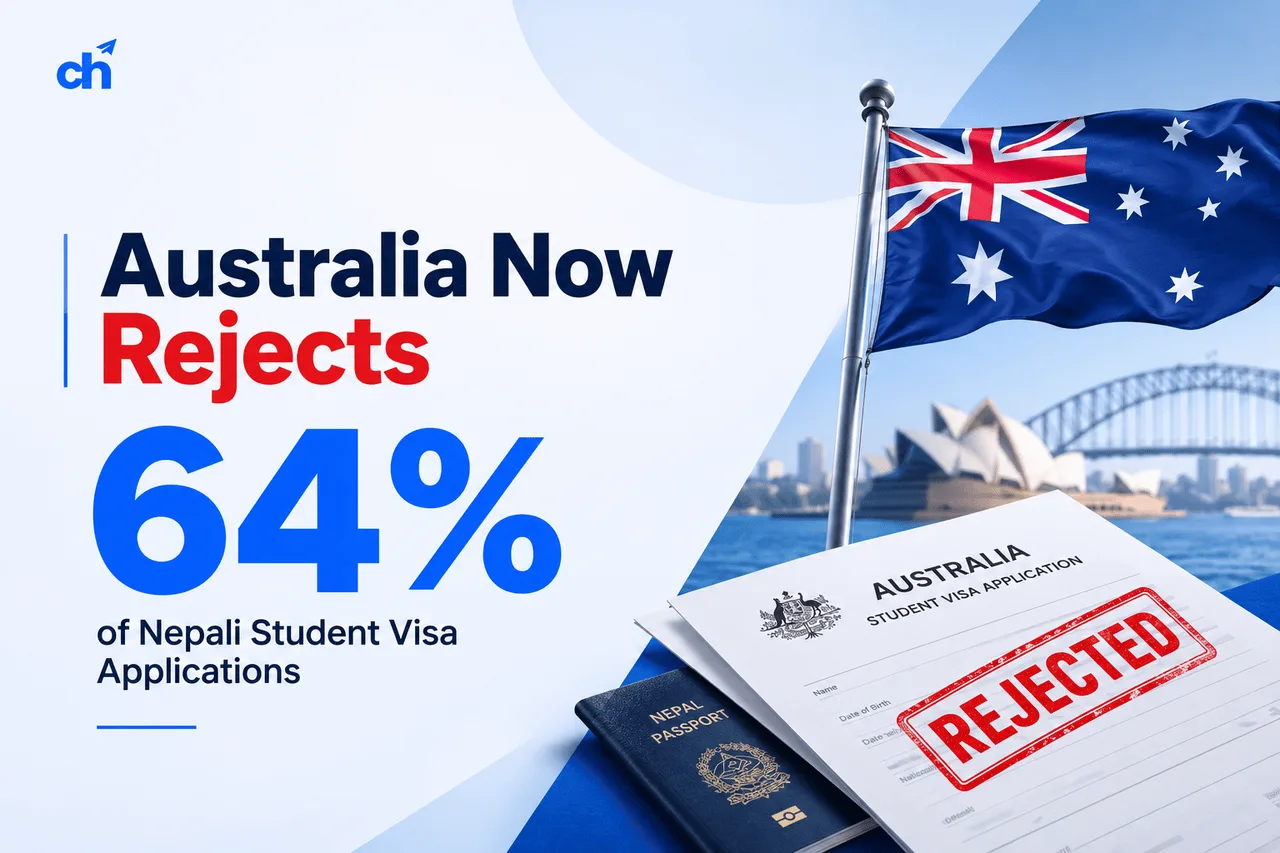
Australia has rejected around 64 percent of offshore student visa applications from Nepal this year, the highest refusal rate ever recorded for Nepali applicants. A year ago, most applications went through. Now most do not.
The shift traces back to Nepal's move from Evidence Level 2 to Level 3, the highest risk category in Australia's visa screening system. Under Level 3, every application gets checked closely. Bank statements, course choice, financial sponsors, all of it gets reviewed with far less room for error than before.
The numbers tell the story. Between January and May this year, only 2,700 of 7,500 offshore applicants from Nepal were approved. During the same period last year, 7,167 out of 8,028 got through. That is not a gradual decline. It is a collapse.
Vocational courses have taken the worst of it. Just 56 out of 549 VET applications were approved this year, a rejection rate close to 90 percent. Students chasing shorter, cheaper diploma routes are the ones getting hit hardest.
Around 60,000 Nepali students remain enrolled in Australia today, but only about 4,000 of them are new arrivals this year. The rest are continuing students who applied under the old, easier system.
Cost has gone up alongside the stricter screening. The Subclass 500 application fee now sits at A$2,500, roughly NPR 260,000, and it is non-refundable whether the visa gets approved or not. With costs climbing, checking what scholarships in Australia for Nepali students are available is worth doing before you apply, not after.
Nepal has not lost its place in the system. Nepali students still make up about nine percent of Australia's international student population, keeping Nepal the third largest source country globally. Australia is not shutting Nepal out. It is asking harder questions before letting anyone in.
For students planning to apply, the message is simple. A clean, well-documented, genuine application still works. A thin one does not, not anymore. Build your finances early, pick a course that actually matches your background, and expect the wait to be longer than it used to be. For a full breakdown of requirements, costs, and process, see our guide to studying in Australia.