
Study in Study in USA
The United States remains one of the most sought-after study destinations for Nepali students. It has the worl...
Every year, tens of thousands of Nepali students leave for universities overseas. The process is long but it is not complicated, and almost all of it comes down to six steps done in the right order. This guide walks through each one, with links to the destination, test, and consultancy resources you will need along the way.
Plan on twelve to eighteen months from the day you start to the day you fly. The single most common mistake is starting the English test too late, which pushes everything else back by a full intake.
Work backwards from what you want afterwards. Post-study work rights, tuition, and the cost of living differ more between countries than the teaching does. Compare the options before you fix on one.
Compare study destinationsNearly every university asks for proof of English through IELTS, PTE, or TOEFL. Graduate programmes in the US often add the GRE or GMAT. Book early: seats in Kathmandu fill up around peak intakes.
Browse test preparationTranscripts, character certificate, migration certificate, passport, and a bank statement showing funds. Nepali certificates carry BS dates that forms want in AD, so convert them once and keep a clean list.
Convert BS dates to ADApply to a spread of universities rather than one dream school: a couple of reaches, a few realistic matches, and one safe option. Watch each intake deadline, because they differ by country.
Find a consultancy to helpOnce you accept an offer and pay the deposit, you need an NOC from the Ministry of Education, then the visa itself. Financial evidence and a credible interview matter more than anything else here.
Read visa guidesSort your foreign exchange approval, tuition transfer, accommodation, and insurance before you book flights. Arrive with enough local currency for the first month.
Australia, Canada, the United States, and the United Kingdom take the biggest share of Nepali students, but Japan, South Korea, and the Nordic countries have grown quickly, largely on the strength of low tuition. Each guide below covers admission requirements, costs, and visa rules for that country.
The United States remains one of the most sought-after study destinations for Nepali students. It has the worl...

Australia remains the single most popular study destination for Nepali students. With over 62,000 Nepali stude...

The United Kingdom is one of the most consistently chosen study destinations for Nepali students, and for good...

Japan has become one of the smartest study destinations for Nepali students who want world-class education wit...
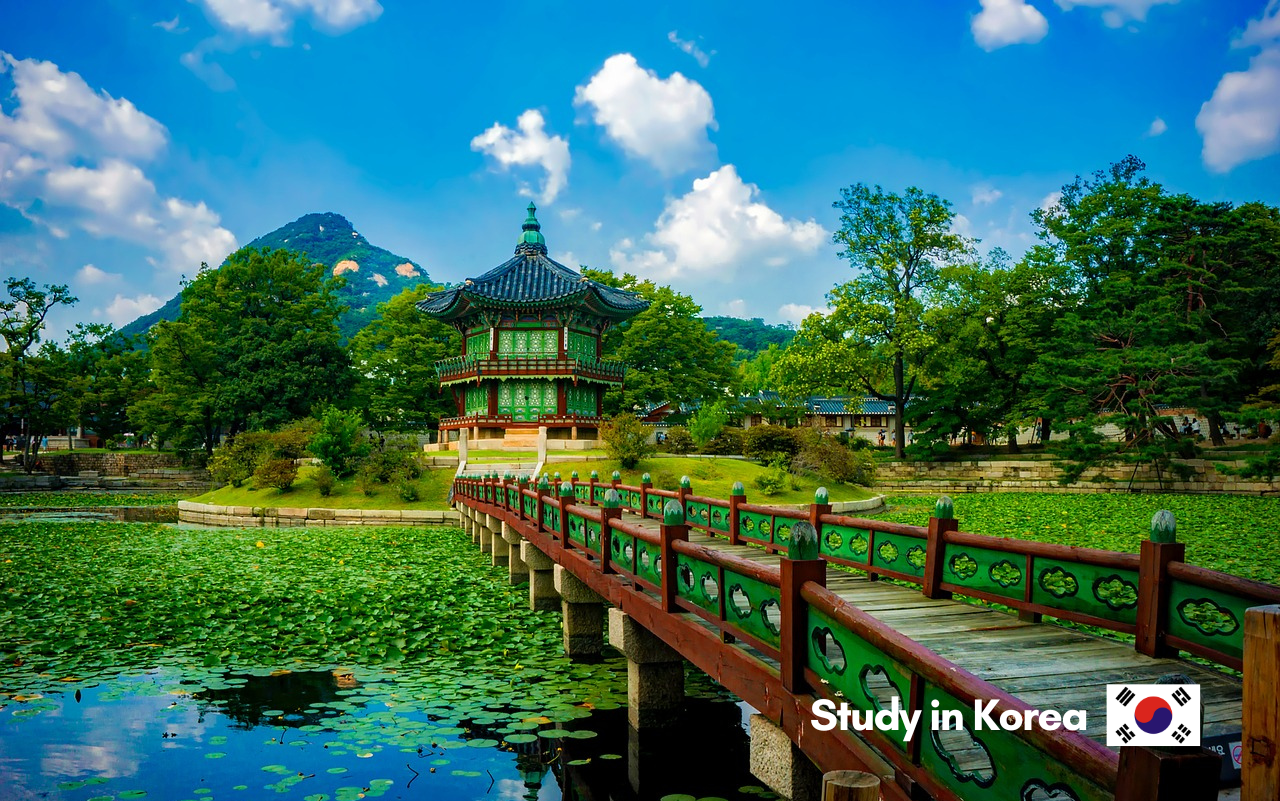
South Korea has quietly become one of the most compelling study destinations for Nepali students. It offers so...
New Zealand is not as loudly marketed as Australia, Canada, or the UK among Nepali students, but it deserves s...
Which test you sit depends on where you are applying, not on which one is easiest. Check the requirement on your university's own page before you book, and give yourself room to resit if the first score falls short.
Budget for three separate things: tuition, living costs, and the one-off cost of applying. The figures below are broad annual ranges for planning only, since they move with the exchange rate and vary widely by city and university.
| Country | Tuition (USD) | Living (USD) |
|---|---|---|
| United States | 20,000 - 45,000 | 12,000 - 20,000 |
| United Kingdom | 15,000 - 35,000 | 12,000 - 18,000 |
| Australia | 18,000 - 35,000 | 13,000 - 20,000 |
| Canada | 13,000 - 28,000 | 10,000 - 15,000 |
| Germany | Often minimal | 10,000 - 14,000 |
| Japan | 4,000 - 9,000 | 8,000 - 13,000 |
Indicative ranges for planning. Always confirm current fees on the university's own website.
Every Nepali student leaving for formal study overseas needs a No Objection Certificate from the Ministry of Education, Science and Technology, so NOC issuance is the closest thing to an official count. That figure has run into the six figures annually in recent years, with Japan, Australia, Canada, the United Kingdom, the United States, and South Korea taking the largest shares. The ministry publishes updated counts each fiscal year, so check its current release for an exact number.
Very few universities admit students straight after SEE, because a bachelor's degree abroad normally requires twelve years of schooling. The practical route is to finish +2, A-Levels, or a diploma first, then apply. What you can do immediately after class 10 is prepare: build your English score, keep every mark sheet and certificate safe, and start a bank account in your own name so you have a savings history when it is time to show funds. A small number of countries offer foundation or pathway years that bridge into a degree, which is worth asking about if you want to leave sooner.
Genuinely free study is rare, but low-cost study is not. Public universities in Germany, Norway, and Finland charge little or no tuition to some categories of international student, though you still have to prove you can cover living costs. The other route is funding: fully funded scholarships such as Fulbright, Chevening, Erasmus Mundus, and DAAD cover tuition plus a stipend, and many universities award their own merit scholarships that cut fees substantially. Both routes reward strong grades and an early start, usually a year or more before intake.
Browse verified education consultancies in Nepal by the destination they specialise in, or get in touch if you would rather talk it through first.